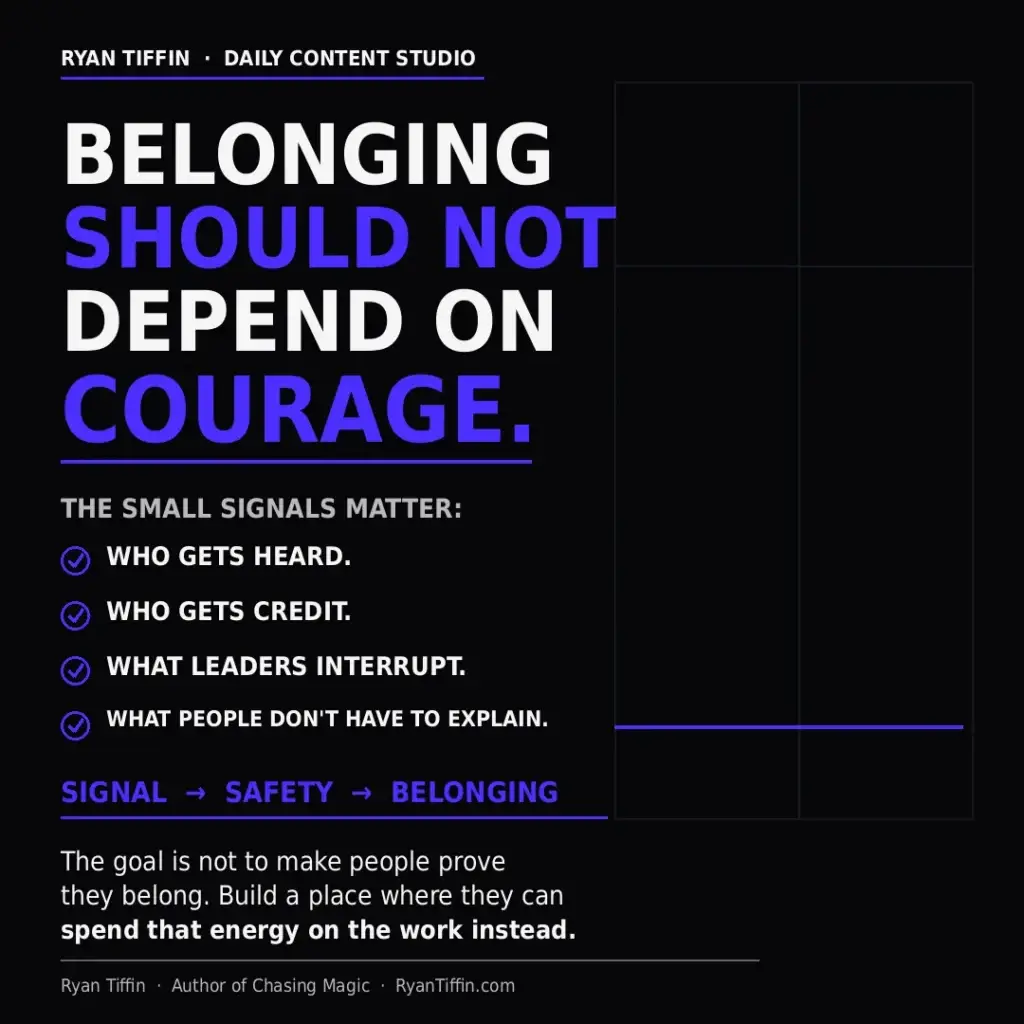
Silence is a terrible recognition strategy. When the only time people hear from a leader is when something is wrong, they eventually learn to treat silence as the closest thing they have to positive feedback.
The problem is that silence is ambiguous. It can mean, “You are doing great.” It can also mean, “Nobody noticed.” Those are very different employee experiences.
Recognition does not need to be elaborate, expensive, or theatrical. It needs to be specific enough that someone understands what worked and why it mattered.
Silence should not be the only sign things are going well.
People need evidence, not guesswork
Most employees are constantly collecting signals about how they are doing. Did that interaction land well? Did I handle the difficult guest correctly? Did the extra preparation matter? Does anyone notice the work that happens before the visible result?
If feedback only appears after a mistake, the organization accidentally teaches people that performance conversations are primarily corrective.
That creates a strange dynamic. Good work becomes invisible because it does not generate a problem, while mistakes receive immediate attention because they do.
Eventually, people can begin to wonder whether the standard is simply: do enough to avoid being talked to.
That is not a culture of excellence. That is a culture of avoidance.
Notice the behavior, not just the outcome
Recognition is most useful when it names the behavior that produced the result.
“Great job” feels nice. “The way you explained the delay before the guest had to ask kept the situation calm” teaches something.
“Thanks for helping” is kind. “You noticed the handoff was getting messy and brought the two teams together before it reached the guest” reinforces a leadership behavior.
The more specific the recognition, the more repeatable the behavior becomes.
That matters in hospitality and guest experience because so much excellent work is preventative. The best recovery may be the one that never becomes a complaint. The best handoff may be the one nobody notices because it feels seamless. The strongest operator may solve a problem before it ever becomes visible to senior leadership.
If leaders only recognize visible heroics, they can accidentally overlook the quiet systems and habits that prevented the crisis in the first place.
Name why it mattered
Recognition becomes even more powerful when it connects the behavior to purpose.
People want to know that their work mattered beyond completing a task.
A frontline employee who receives a specific explanation of how their action protected the guest experience begins to see the larger system. A project teammate who hears how their early communication prevented rework understands that communication is not administrative overhead. A manager who is recognized for creating calm during a difficult shift learns that emotional steadiness is part of operational leadership.
The formula is simple:
That kind of recognition gives people a map, not just applause.
Do not save recognition for the annual review
Timing matters.
Recognition delivered months after the moment loses much of its instructional value. By then, the person may barely remember the decision, conversation, or behavior you are referencing.
The closer the feedback is to the work, the easier it is for someone to connect cause and effect.
That does not mean leaders need to interrupt the day with constant praise. It means building small recognition habits into the operating rhythm: a comment after a difficult interaction, a quick message at the end of a project, a specific callout in a pre-shift or team meeting, or simply stopping long enough to say, “I saw what you did there.”
Those moments cost almost nothing. Their absence can cost much more.
Recognition is operational information
We sometimes treat recognition as a culture initiative sitting somewhere beside the real work.
I think that undersells it.
Recognition is information about the standard.
When leaders consistently recognize certain behaviors, the team learns what the organization actually values. When the only behaviors discussed are mistakes, people learn to optimize for avoiding criticism. When positive behaviors are named clearly, the standard becomes easier to see.
This is why recognition and accountability are not opposites. Strong cultures need both.
Accountability says, “This did not meet the standard, and here is what needs to change.” Recognition says, “This is the standard in action, and here is why we want more of it.”
Both create clarity.
Make invisible work visible
Some of the people most at risk of feeling invisible are the ones whose work is easiest to take for granted.
The person who always prepares the room. The employee who quietly helps a new teammate. The manager who catches the scheduling issue before it becomes chaos. The colleague who documents the decision everyone else would have forgotten. The frontline team member who keeps a guest from ever needing to escalate.
When that kind of work becomes dependable, leaders can stop noticing it precisely because it is dependable.
That is the trap.
Consistency should make recognition more important, not less.
A simple leadership practice
Before the day ends, think about one person whose work made something easier, calmer, clearer, or better.
Do not just tell them they did a good job.
Tell them what you noticed.
Tell them why it mattered.
Tell them what you hope they keep doing.
Then make that a habit rather than an exception.
Silence should not be the only sign things are going well.
For more experience-led thinking on leadership, employee experience, guest experience, and culture, explore RyanTiffin.com and Chasing Magic: How Experience Changes Lives and Shapes Leaders.
Leadership gets practical when the idea can survive the next shift.
Explore more essays on guest experience, operations leadership, employee experience, and the everyday decisions that shape how people feel.
Browse all Insights